Why Attic Ventilation Is the Most Overlooked Factor in Roof Lifespan
Most roofs don't start failing from the outside first.
They start breaking down in the attic.
Heat buildup, trapped moisture, and poor airflow can shorten the life of a roof long before you ever notice a problem from the ground. Most homeowners are watching for missing shingles or active leaks. What they rarely consider is what's happening on the other side of the roof decking.
At Integrity Roofing Co., ventilation is something we assess on every single job. And what we find, more often than not, is a system that was never right to begin with.
What balanced ventilation actually means
A properly ventilated roof needs two things working together: intake at the eaves and exhaust at the ridge. Cool air enters from below, warm moist air exits at the top, and the attic stays close to outdoor temperature year-round.
When that balance is off — when there's too much exhaust and not enough intake, or vents placed so close together they short-circuit each other — air stagnates. Heat builds up. Moisture accumulates. And the roof starts breaking down from the inside out.
Building code requires a certain amount of ventilation per square foot of attic space. What it doesn't require is that the system actually works. A roof can pass inspection and still have a ventilation problem that will shorten its lifespan by years.
What goes wrong — and what it costs
When attic heat can't escape, it attacks the shingles from below. The asphalt breaks down. The granules — the protective coating you might notice collecting in your gutters — start washing away faster than they should. By the time the damage is visible, it's usually been happening for years.
There's also the warranty issue. Every major roofing manufacturer ties their product warranty to proper attic ventilation. If the system isn't balanced at the time of installation, the warranty may not be valid — regardless of what was paid for or promised. We've seen this in homes where a previous contractor reinstalled whatever ventilation was already there without stopping to check whether it worked.
The Portland area has a specific challenge
Older homes throughout Portland and the surrounding region were built to breathe naturally — through gaps in framing, through older insulation, through the materials themselves. Neighborhoods like Irvington, Ladd's Addition, Eastmoreland, and Sellwood-Moreland are full of Craftsman bungalows, Tudor Revivals, and Victorian-era homes that were designed for a different era of construction. The same is true across the river in Vancouver, Washington, where historic districts hold some of the most intact older residential properties on the West Coast. When these homes get modernized — tighter walls, spray foam insulation, updated windows — the house gets sealed up. The ventilation doesn't always get updated to match.
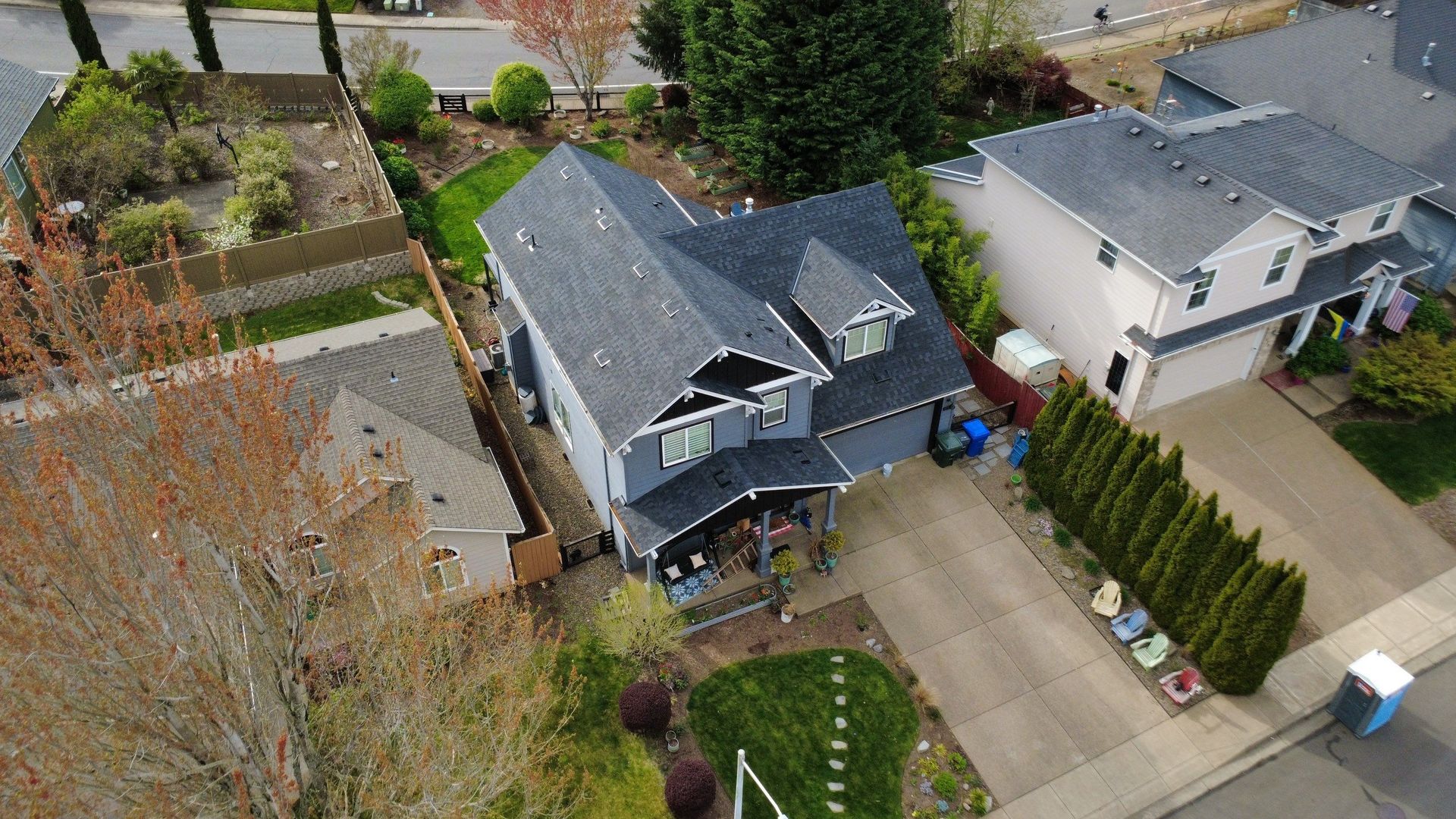
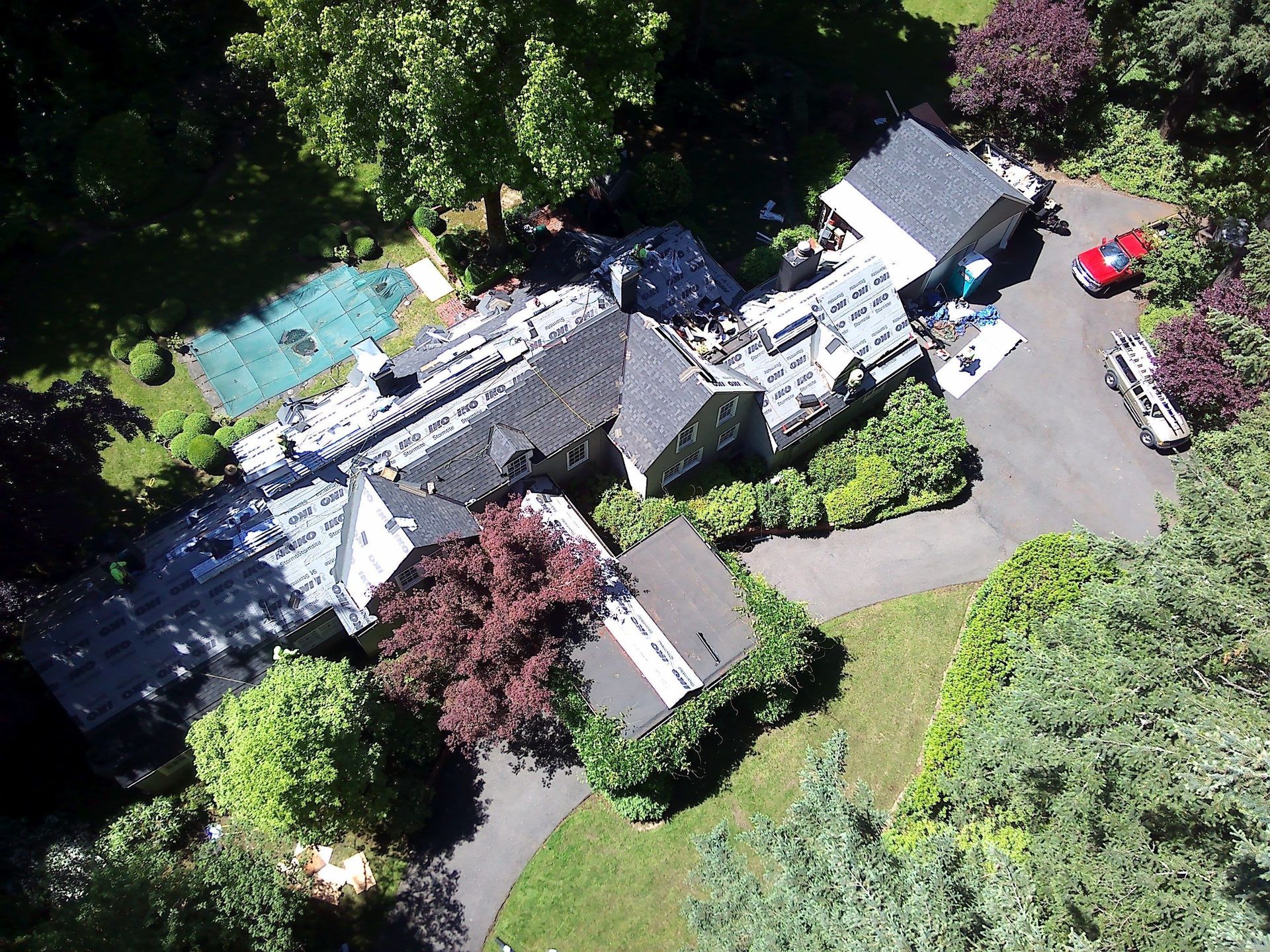
We recently re-roofed a Portland home with solid foam insulation throughout. There was no attic space for air to move. To solve it, we pulled the sheeting and cut channels directly through the foam so air could travel from the eaves to the ridge. It's not a standard solution. It was the right one for that house.
Every attic is different. Square footage, ceiling type, how sections connect — all of it changes the calculation. The only way to know what's actually going on is to get in there and look.
A note for property managers
If you manage multifamily properties and you're dealing with mold that keeps coming back — same unit, same corner, same season — the roof may be the source.
We've been called to properties where mold had been treated multiple times with no lasting result. In both cases, the cause was a ventilation failure: vents that were present but not functional, or a system where every vent was working against the others. Fixing the ventilation resolved the mold. Not treating it — fixing the source.
What we do differently
When Integrity Roofing assesses a roof, ventilation is part of every inspection. We calculate the right system for each specific attic. We don't reinstall what was already there and call it done.
If the system needs to change, we show you exactly what and why before we start. You make the decision with the full picture.
Schedule a free inspection
If you want to know what your attic is actually doing — give us a call.
Proudly serving homeowners and property managers across the greater Portland metro area, Vancouver, Washington, and down through Salem along the I-5 corridor — and builders throughout Oregon and southwest Washington.
📞 503-242-0803
Recent Posts