
What A Thorough Inspection Answers
A good inspection answers three questions that matter:
- What's actually happening up there
- How much life your roof has left
- What needs attention now — and how soon
The answers don't come from the driveway. They come from walking the roof and looking inside the attic. That's where the real information is.
What The Ground View Can And Can't Show You
Visible from the ground:
- Missing or curled shingles
- Moss, debris, or visible sag
Usually not visible from the ground:
- Flashing condition around chimneys, skylights, and vents
- Underlayment or deck issues underneath the shingles
- Ventilation imbalance affecting the roof from the inside
- Early seam separation or fastener failure
The issues that actually shorten a roof's life — ventilation problems, hidden flashing failure, deck rot underneath — rarely show up from the street.
Why We Get On Top Of The Roof
A thorough inspection happens up close.
From the ground or from aerial views, you can see shape, surface, and obvious damage. Up close is where you see what's actually going on — flashing condition, fastener patterns, the soft spots that signal deck rot underneath. The attic often tells an even more complete story.
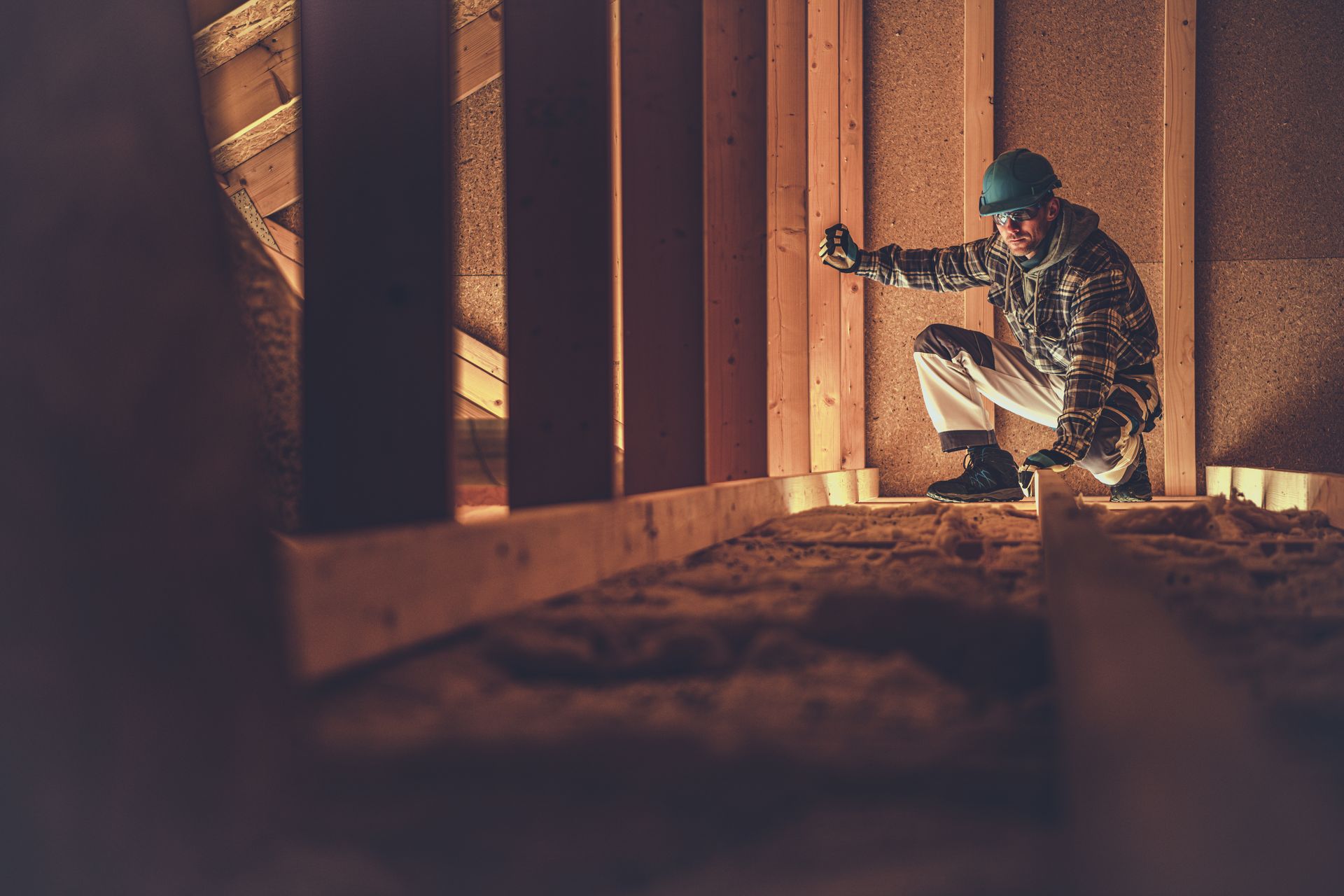
When we inspect a roof, we walk it. When the attic is accessible, we go inside. We look at ventilation balance, nail penetration, insulation, and signs of moisture. It's not unusual to find that what looks like a roof leak is actually a ductwork issue from an exhaust fan — something you only discover once you're inside the attic.
When our inspector sees something worth a closer look, they have a network behind them:
- A field team of roofers and repair technicians with on-the-ground experience
- Manufacturer partners at GAF, IKO, and CertainTeed (we're GAF Certified Plus and IKO Craftsman Premier certified)
- Ongoing training on every code update — so we're reading your roof against current standards, not five-year-old ones
That's often why the fix turns out to be smaller than people expected.
Most Roofs Fail From Both Sides
A roof has two enemies: the weather above it and the heat beneath it.
When attic ventilation isn't balanced, heat and moisture build up under the shingles and break down the asphalt from below — the same layer that keeps water out of your home. By the time it shows up inside, it has usually been happening for years.
Most homes aren't properly ventilated. That one issue affects roof lifespan more than almost anything else, and it also affects your manufacturer warranty — most roofing warranties require balanced ventilation to stay valid.
A real inspection always includes the attic when it's accessible. When we find a ventilation issue, we work with the manufacturer to design a fix that keeps your warranty intact and extends the roof's life.
Roofing Systems Installed the Right Way
Installing a roof isn’t just about replacing shingles. A complete roofing system includes multiple components that work together to protect the structure of the home or building, including:
- flashing
- underlayment
- ventilation
- ridge and starter shingles
- manufacturer-approved materials
Integrity Roofing Co. focuses on installing these systems correctly, so each roof performs as intended and qualifies for manufacturer warranty protection when applicable.
A Team Built on In-House Crews
One of the biggest differences at Integrity Roofing Co. is how our crews are structured. Many roofing companies rely heavily on subcontractors. While subcontracting is common in the industry, it can sometimes lead to inconsistencies in scheduling, communication, and installation practices.
At Integrity Roofing Co., roofing work is performed by W-2 employees, not subcontractors. This allows our leadership team to maintain:
- consistent installation standards
- clear communication between inspection and installation teams
- reliable scheduling for homeowners and builders
- strong accountability throughout each project
“Balanced ventilation is one of the most important parts of a roofing system. If it’s not correct, the roof system may not qualify for warranty coverage.”
Andrew Howell, VP of Operations, Integrity Roofing Co.
We're Not Here To Sell You A New Roof
We're here to tell you what condition your roof is in, what your options are, and what makes sense right now. Then you decide.
We can do that because our inspectors are roofers. They've installed and repaired thousands of roofs, and they read a roof differently than someone whose job is to sell one. They notice:
- Flashing that is beginning to fail before it leaks
- Fastening patterns that signal rushed installation
- Ventilation imbalance that is shortening the roof's life
- The handful of repairs that extend a roof's life by years
The result is often a smaller fix than people expect. Sometimes it's a targeted repair and an annual check-in. Sometimes it's a maintenance plan. Sometimes it's replacement. Whatever it turns out to be, you'll know exactly why — and what your choices are.
“We don't employ professional salespeople. We send roofing professionals — people with roofing backgrounds — to come inspect your roof and dig in to figure out what's going on. We communicate clearly based on actual roofing experience.”
—
Andrew Howell, VP of Operations, Integrity Roofing
When To Schedule A Roof Inspection
Most people wait until something shows up inside the house. By then, it has usually been building for a while. Here are better moments to schedule one:
- Annually, once your roof is 3+ years old — our standard recommendation
- After a major wind or hail event — damage often doesn't show up inside for months
- Before buying or selling a home — roof condition affects appraisal and negotiation
- When your roof is 15+ years old — materials reach fatigue even without visible damage
- When you see signs inside — paint bubbling, ceiling stains, or mold that keeps coming back, especially in bathrooms or along exterior walls
- When condensation shows up in the attic — almost always a ventilation issue
A Roof Has Options
A roof showing its age isn't automatically a candidate for replacement.
Sometimes it is — when the fiberglass mat is showing, there's no repair that fixes that. But in many cases, targeted repairs and maintenance can add real life to a roof that still has something left to give.
A good inspection will tell you the difference. You'll know exactly where your roof stands — and what your real choices are.
“I went out to a house in Vancouver for what was supposed to be a re-roof estimate. Got on the roof and saw it had plenty of life left. He had a leak — I could see where it was coming from. I told him: 'A couple thousand in repairs will get you five more years before you need to replace.' He was on a fixed income. Three other roofers had already told him he needed a full replacement. We did the repairs. He hasn't had a problem since.”
—
Jonathan Coody, Lead Estimator + Warranty and Repair Manager, Integrity Roofing
What You Should Walk Away With
After a thorough inspection, you should know:
- The current condition of your roof, explained in plain language
- How much usable life is left
- What needs attention — and how soon
- Your real options: repair, maintain, plan ahead, or replace

Our Partners




Find out what your roof is actually doing.
Not what it looks like from the driveway. The real picture — on the roof, in the attic, and explained to you in plain language.
Start the Conversation
If you’re a homeowner, start with a professional roof inspection. Builders and contractors—contact us to support your upcoming project and schedule.